Modernize enrollment management with CRM strategies are essential for institutions that want to improve efficiency, communication, and student engagement. While a student information system (SIS) serves as a database, it was never designed to function as a true relationship management platform.
As a result, many admissions teams struggle with disjointed processes, limited visibility, and inefficient communication. These challenges make it difficult to deliver a consistent and personalized experience for prospective students.
Modernize Enrollment Management with CRM
Institutions that prioritize CRM can transform how they manage the enrollment lifecycle. CRM systems track student progress from inquiry through enrollment, enabling faster decision-making and more effective communication.
In addition, CRM platforms help institutions centralize data and improve collaboration across departments. This creates a more connected and efficient enrollment process.
What to Look for in a Modern CRM
Choosing the right CRM starts with understanding what features are required to support your enrollment strategy.
A modern CRM system should include:
- Unlimited prospect inquiry forms
- A “smart” applicant portal
- Prospect relationship management tools
- Multi-application management
- Dynamic checklist requirements
- Event management capabilities
- Interview scheduling tools
- Recruitment school and organization tracking
- Advanced analytics, dashboards, and reporting
Equally important, a CRM should be easy to use. Admissions teams should be able to configure workflows and processes without relying on IT or development resources.
Why Cloud-Based CRM Matters
Modern enrollment strategies rely on flexible, scalable systems. Therefore, cloud-based CRM platforms play a critical role in supporting long-term success.
Learn more about cloud CRM in higher education:
https://www.enrollmentrx.com/the-case-for-cloud-based-crm-in-higher-education/
Because cloud solutions are continuously updated and accessible from anywhere, they allow institutions to adapt quickly to changing needs.
Key Questions About CRM Implementation
During CRM evaluation and implementation, institutions often ask important questions.
How long does a CRM implementation take?
A successful CRM implementation typically takes about six months. However, planning and preparation are critical to ensuring long-term success.
Does CRM integrate with SIS?
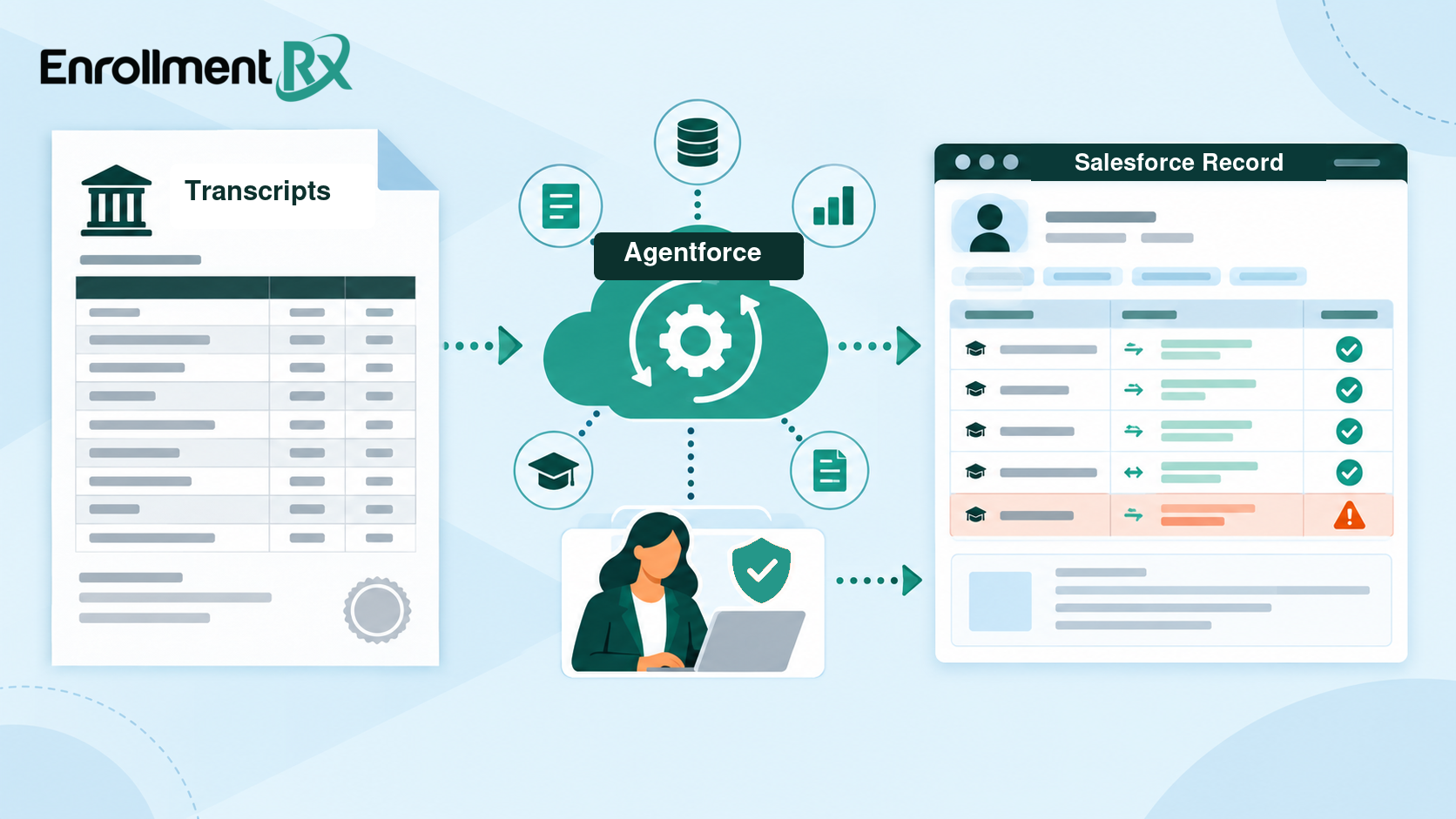
Integration between CRM and SIS is essential. Systems must communicate seamlessly so that data flows accurately between platforms.
What data belongs in CRM vs. SIS?
Institutions must define how data moves between systems and determine where master records are maintained. This ensures consistency and reliability across the enrollment process.
What This Means for Admissions Teams
Admissions teams need tools that support both efficiency and engagement. However, relying solely on a SIS limits the ability to communicate effectively and respond quickly.
By modernizing enrollment management with CRM, institutions can streamline processes, improve communication, and create better student experiences.
Learn More
If you are looking to modernize enrollment management with CRM, Enrollment Rx can help.
Start the conversation:
https://www.enrollmentrx.com/contact/